
S386 Twitter

S386 news today: Twitter chatter is buzzing with the news that Lee and Durbin might attempt UC voting in Jan. There are no confirmed report on this yet. Some reports also claim that Lee might drop Durbin’s S386 amendment deal clauses completely as he is expecting Republican objection on Durbin’s demands. These are all rumors at this time. S386 makes the system First Come First Serve. Doctors, Scientists, Engineers etc have an estimated wait time of 50 years for Greencard just because they were. Immigration Voice, San Jose, California. 36,530 likes 32 talking about this. A national non-profit organization working to foster American innovation & alleviate the problems faced by legal.
Sen. Rick Scott (R-FL) stopped Sen. Mike Lee’s (R-UT) S.386 outsourcing bill just moments before it was about to pass through the Senate Wednesday, saying the Trump Administration wants to assess any unwanted outcomes from the legislation.
Scott objected to Lee’s bill because it does not protect the inflow of Spanish-speaking migrants from Latin America into Florida. “I’ve also spoken to the White House, and agree we need more time to study the proposal and to understand its impact on our immigration system,” he added.
- US Senate passes S386 Bill that eliminates country-caps on employment-based green cards This could potentially benefit thousands of Indians who are waiting for green card in the country.
- The latest tweets from @immivoice.
All GOP senators had already given quiet approval to the outsourcing provisions in the bill pushed by Lee, which also includes a legislative backdoor allowing an unlimited inflow of foreign workers into the U.S. labor market, says a Hill source.
S386 News Twitter
Scott announced his Florida objection at 3.00 PM during the Senate’s “Unanimous Consent” process, which usually allows minor bills to pass the Senate when no senator objects.
“I’m disappointed after all of these months of negotiation,” said Sen. Richard Durbin (D-IL), a top-ranking Democrat who had just announced his surprise agreement with Lee’s giveaway bill. Durbin accepted Lee’s bill after months of aggressive picketing and racism claims by India’s workers in the United States.
Lee denounced Scott’s intervention, even though he had just spent several minutes praising Trump’s August 3 decision to protect 200 jobs in Tennessee from H-1B outsourcing.
The Lee-Durbin bipartisan backdoor into the U.S. labor market is displayed on page 27 of the Lee-Durbin legislation. Winchiphead port devices driver download. The text says that foreigners can get renewable work permits after waiting just two years in the backlogged line for one of the 140,000 green cards issued each year. The bill says:
Immigration S386 Twitter
An alien … who has filed a [green card] petition or on whose behalf a [green card] petition has been filed for immigrant status … may file an application with the Secretary of Homeland Security for adjustment of status [to a legal reident] if such petition was approved not less than two years before the date on which the application for adjustment of status is filed … [and] shall be eligible for work authorization and travel permission.
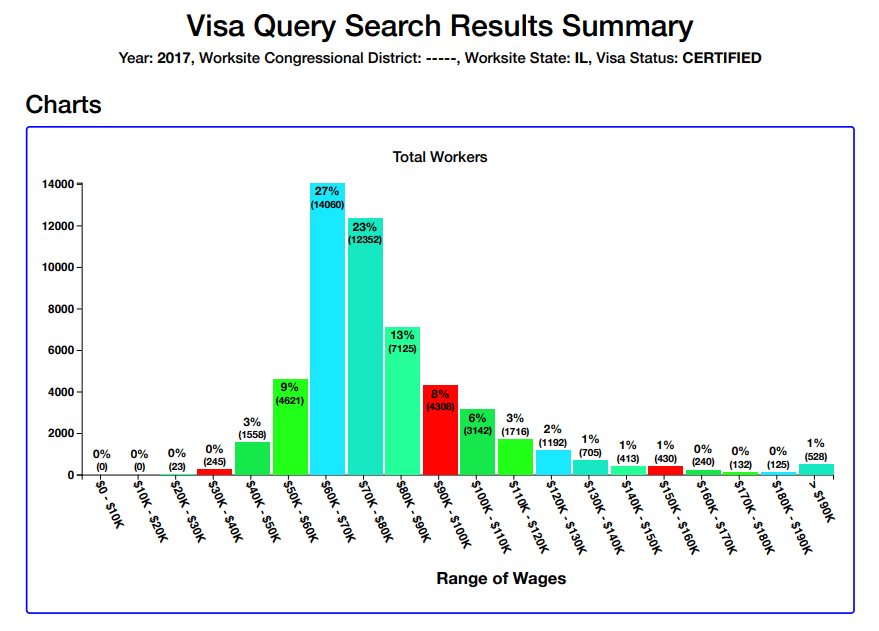
Thie “Early Filing” open-door rule will allow many employers to sideline millions of Americans, and to fill up their workplaces by recruiting foreign workers into the H-1B program and other labor pipelines by promises to put them in the line for green cards and work permits.
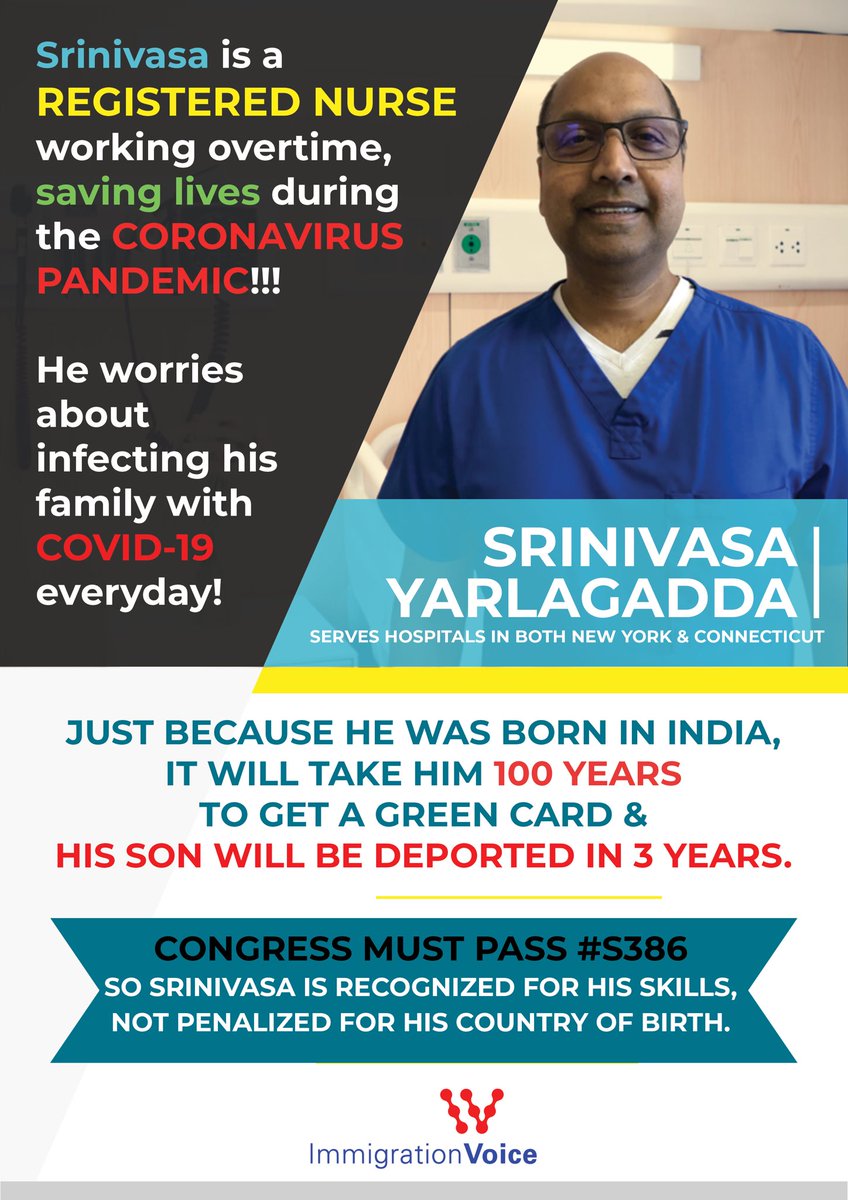
But the Lee-Durbin deal protects Republican incumbents by keeping the annual cap of 140,000 on the annual, employer-sponsored inflow of immigrants.
“This could be the biggest immigration story in 30 years” since President George George H. Bush’s 1990 bill, said John Miano, a lawyer with the Immigration Reform Law Insitute. “It is a formalized indentured servitude… These people in Congress don’t work for Americans – they have their own special interests that are not the American people,” Miano said.
“This whole thing is not getting any publicity in the conglomerate media,” he added.
Pro-American immigration-reformers worked against the legislation, and they hoped to persuade the White House or a few GOP Senators to announce their opposition before the vote.
The dramatic vote came the day after Trump restated his opposition to the H-1B job-outsourcing business. “We’re finalizing H1-B regulations so that no American worker is replaced ever again,” he told several tech-workers at the Tennesee Valley Authority whose jobs were to be outsourced to companies that employ H-1B workers. “H1-Bs should be used for top, highly-paid talent to create American jobs, not as inexpensive labor program to destroy American jobs,” he said.
Election-year Trump sees where the votes are & finally signs an Executive Order to cut gov't H-1B outsourcing.
The GOP's biz wing hates the loss, even tho' 200 TVA jobs — or 18K jobs in gov't agencies — are a teaspoon out of the Fortune 500's cake.https://t.co/oOYTmGktpt
— Neil Munro (@NeilMunroDC) August 3, 2020
“It is not enough for Republicans to object — they must oppose this bill and be on record opposing this,” said Kevin Lynn, the founder of U.S. Tech Workers, who helped Trump declare his support for the TVA workers.
“It is my opinion that the president does not reward the bad behavior that has led to the displacement of so many Americans by enjoyment-visa holders,” Lynn told Breitbart before the vote.
“Unanimous consent is used to rename post offices,” Lynn added. “It is not designed to pass legislation that would impact the citizens of the United States.”
Sen. Rick Scott steps in. He wants carve outs. Sen. Lee doesn’t. pic.twitter.com/E1GIhvNwrP
— U.S. Tech Workers (@USTechWorkers) August 5, 2020
The “Fairness for High Skilled Immigrant Act of 2020” is being packaged by Lee, Durbin, business lobbies, and friendly reporters as a fair-minded concession to at least 300,000 Indian contract workers who are waiting many years to get the green cards.
The bill includes curbs on Indian companies that feed many workers into the H-1B program. But the curbs are delayed three years, giving lobbyists time to quietly undo Durbin’s so-called “50/50 rule” before they begin to bite.
However, the huge Indian backlog only exists because federal law allows employers of any size to offer an unlimited number of green cards to foreign graduates in a tacit swap for years of work.
Federal law caps the award of green cards at 140,000 per year, while a subsidiary rule puts a cap of roughly 20,000 on the number of green cards that can go to people from any one country.
So the waiting line was jointly and knowingly created by the employers and the many Indian graduates who agree to swap green cards in exchange for years of work. This result is a massive backlog of Indian nationals who are working in U.S. jobs while they wait years to get one of the 140,000 green cards awarded each year.
“Based on what I’ve seen of this bill and the amendments, there is not even the slightest attempt to curb the number of green cards that can be paid in exchange for work,” said Lynn. According to a March report by the Congressional Research Service:
S.386 would not alter the growth of future backlogs compared to current law… the total backlog for all three employment-based categories would increase from an estimated 915,497 individuals currently to an estimated 2,195,795 by FY2030
This system has sidelined huge numbers of American graduates. Many CEOs prefer imported contract workers because they are compliant and cheap — unlike American professionals, who argue back to executives or quit to work at rival companies.
The Lee bill is backed by U.S. investors and multinational Fortune 500 companies who stand to gain a massive inflow of new Indian workers following the removal of the backlog. The S.386 bill is also backed by India’s government, whose economic strategy is built on the expert of workers to the United States, the United Kingdom, and other countries.
If the “Early Filing” becomes law, many extra Indians will rationally migrate into U.S. jobs through the legislative back door, because many companies can offer employment contracts that guarantee renewable U.S. work permits — and eventual green cards — in exchange for several years of low-wage work.
This migration would dramatically expand the green-cards-for-work economy that already excludes many Americans from Fortune 500 jobs.
The backdoor rule was proposed by Sen. Lee and is defended by Durbin on the grounds that it helps the children of foreign temporary workers to stay in the United States.
Vit laptops & desktops driver download for windows 10. There are no limits whatsoever on the number of Indian graduates who can get jobs in the United States.
The multi-year H-1B visa program has an annual cap of 85,000 for workers hired by for-profit companies. But there is no cap on the number of H-1B workers at non-profit workplaces, including universities, hospitals, and research centers. Roughly 600,000 H-1Bs hold jobs in the United States, including many in low-wage gig-worker jobs, or in temporary jobs where they learn to export the jobs back to India. Roughly 70 percent of H-1Bs are from India.
The L-1 program is uncapped, but it is informally limited by U.S. embassy officials. Roughly 40,000 L-1 workers hold staffing jobs in the United States.
There is no cap on the Optional Practical Training (OPT) and Curricular Practical Training (CPT) pipelines. They allow foreign graduates to get low-wage or no-wage jobs in the United States. This worker pipeline goes through the universities — which collect roughly $40 billion as foreigners first enroll in the colleges before asking for the work permits — to a wide variety of elite companies, Fortune 500 firms, and many low-status subcontractors.
U.S. colleges strongly support the OPT and CTP work-permit programs, even as they annually graduate roughly 800,000 Americans who have skilled degrees in healthcare, engineering, business, science, math, software, or architecture.
On Wednesday, Durbin repeatedly described his disappointment at Scott’s intervention and called on the Senate to pass another migration-boosting bill similar to the 2013 “Gang of Eight” amnesty. “The only rational answer is to raise the cap on the green card quotas,” he said.
“Immigration defines this country, our diversity defines this country,” Durbin said, amid a national economic crash that has pushed 30 million Americans out of their jobs.
#SenMikeLee's #S386 is alive, again, b/c GOP Senators and DHS won't say no to #H1B and #OPT outsourcing by the Fortune 500.@SenatorDurbin has contained the outsourcing bill even tho' he also wants to boost immigration.
US grads need own lobby groups.https://t.co/S6dlBZmY2u
— Neil Munro (@NeilMunroDC) July 31, 2020
Follow Neil Munro on Twitter @NeilMunroDC, or email the author at NMunro@Breitbart.com.
On July 9, 2019, Senator Mike Lee (R-Utah) introduced the Fairness for High Skilled Immigrants Act, S.386, which seeks to equalize the employment-based (EB) green card backlog by eliminating categorical per-country caps. The bill has was amended several times as Sen. Lee continued to attempt to pass it via a unanimous consent (UC) vote in the Senate. This page will serve as a regularly updated explainer on the changes made to the Fairness for High Skilled Immigrants Act and an overview on where things stand. On December 2, 2020, the bill passed the Senate via Unanimous Consent after being amended for the fifth time.
July 9, 2019: Senator Lee introduced S.386 in the Senate as an identical companion to H.R. 1044, which passed in the House convincingly the following day. The bill would:
- Remove per-country caps for EB green card categories. This would equalize the green card backlog, which is faced almost exclusively by Indian and Chinese applicants, some of whom must wait decades after their petitions are accepted. The bill would also raise per country caps for family based petitions from 7% to 15%.
- Establish a transition period of three years. The first year after enactment, 15% of EB-2 and EB-3 visas would be reserved for countries not affected by the backlog, or so-called “Rest of World” (ROW) applicants. In years two and three, 10% of EB-2 and EB-3 visas would be reserved for ROW applicants. After year four, USCIS would distribute all visas on a first come, first served basis.
- Institute a “do no harm” provision, which would ensure that all applicants who have already petitioned for a green card will be able to obtain status as soon or sooner than they would have had the bill not gone into effect. An Emory University immigration law professor estimated that this provision would protect as many as 150,000 ROW applicants.
More information on H.R. 1044 can be found here.
September 25, 2019: After objections from Senators Grassley (R-Iowa), Paul (R-Kentucky) and Perdue (R-Georgia), Senator Lee added an amendment to address their concerns. This amendment would:
- Add additional employer restrictions to the H-1Bvisa program. These include restricting employers from hiring H-1B employees without first advertising openings to workers already in the U.S., providing additional authority for the Department of Labor to review and investigate H-1B wage malpractice, and new fees for Labor Condition Applications (LCAs) that employers must pay to sponsor H-1B employees.
- Provide a solution for foreign nurses. The elimination of per-country caps could mean thousands of nurses, who often have no access to the H-1B program, would be suddenly thrown into a multi-year backlog. This amendment would exempt 5,000 Schedule A Shortage Occupations (primarily registered nurses) from the annual EB green card cap until nine years after enactment.
December 17, 2019: After an objection from Senator Durbin (D-Illinois) – and after he introduced his own green card backlog solution – Senators Lee and Durbin negotiated a second round of changes to the bill. These changes would:
- Provide a new status for nonimmigrant visa holders who are in the U.S. and waiting in the green card backlog. The new status would allow expanded travel rights and the ability to change employers. The new status would be available to EB-1, EB-2 and EB-3 applicants on most nonimmigrant visas who have had their I-140 green card petitions approved (the majority of the backlog), or if the I-140 petitions have been pending for more than 270 days. Petitioners would be required to have a job offer requiring a college degree and a signed letter from the employer that other employees have similar terms of employment. The dependent children of the new status recipients would be allowed to retain dependency status for the duration of the green card application process.
- Implement new transition rules for ROW applicants that are applying from outside the U.S., who would not be able to access the new status. For eight years after enactment, 5.75% of green cards would be reserved for ROW applicants outside of the U.S. About 18% of green card recipients apply from abroad. This change would not affect the three-year transition period in the initial bill.
- Initiate additional reforms to the H-1B process. The amendment would prevent “50-50” companies – those with over 50 employees and more than 50% of whom are on H-1B visas – from hiring any additional H-1B workers. The amendment also includes an anti-retaliation clause for H-1B whistleblowers and some additional wage reporting requirements for employers.
March 3, 2020: After a potential objection from Senator Cotton (R-Arkansas), and concerns from USCIS that the bill as amended would be difficult to implement, Senator Lee made a third round of changes to the bill. These changes would:
- Eliminate the “do no harm” clause from the original bill, which would have protected an estimated 150,000 applicants who have already submitted petitions for EB green cards from any new wait times that come as a result of the bill. This provision will particularly affect ROW applicants who are not currently affected by the current green card backlog, but would face lengthy wait times of five years or more as soon as the bill is enacted.
- Lengthen the transition period from three to nine years. EB-2 and EB-3 green cards reserved for ROW applicants would increase from 15% to 30% in the first year, 10% to 25% in year two, 10% to 20% in year three, 0% to 15% in year four, 0% to 10% in years five and six, and 0% to 5% in years seven, eight and nine. This would offset some of the impact of eliminating the “do no harm” clause, as it would reduce waiting times for approximately 72,000 additional ROW applicants.[i]
- Require a two-year waiting period before early adjustment of status filings. The December 17, 2019 amendment initially allowed the new status to almost anyone on a nonimmigrant visa with a high skilled job offer and either an approved I-140 green card petition or a petition that has been pending for at least 270 days. The new language no longer offers status to those with pending I-140s, and would only allow early adjustment of status to those who have had approved I-140 petitions standing for two years. Most of those affected by the backlog already have approved I-140s. However, as of June 30, 2018, there were still 45,889 pending I-140 petitions. According to USCIS, petitions typically remain pending for betwen 150 to 435 days.
- Delay H-1B restrictions. The bill would delay enactment of the December 17, 2019 amendment related to the “50-50” H-1B restriction for two years.

August 5, 2020: After further objections from Senator Durbin to the March 3 changes, Senators Lee and Durbin negotiated a second compromise. After Senator Lee introduced the compromise, it was blocked by an objection from Senator Rick Scott (R-Florida). The most recent Durbin-Lee compromise would:
- Delay removal of per country caps until the first day of the second fiscal year after the provisions are enacted. This provision would protect more of the ROW applicants who are no longer protected due to the absence of the “do no harm” clause. The lengthened transition period from the March amendment remains in place.
- Amend H-1B restrictions. The bill would reduce Lee’s two-year delay for sanctions on “50-50” companies to 180 days. The bill would also limit the restrictions on 50-50 companies to only impact new H-1B applicants, not those seeking to renew H-1B status or transfer to another employer.
December 2, 2020: After negotiations between Senator Lee and Senator Scott, a compromise was reached and the bill was passed in the Senate via unanimous consent vote. The final amendments to the Senate version of the bill would:
S386 News Senate
- Implement restrictions on immigrants affiliated with the Chinese military. The bill would deny adjustment of status for immigrants who are determined by the Secretary of Homeland Security to be affiliated with the military forces of the People’s Republic of China or the Chinese Communist Party. It is not clear how many individuals this provision would affect, as a conscription system is employed in China even though mandatory military service is not.
- Establish additional transition guidelines ensuring access to employment-based green cards for those applying from outside the U.S. In the first nine years after implementation, no more than 70% of employment-based green cards could go to current H-1B visa holders and their dependents. After nine years, no more than 50% of employment-based green cards could go to current H-1B visa holders and their dependents. Medical personnel and others who have been granted a national interest waiver would be exempted from this restriction.
[i] This number is calculated by:
(1) Determining the EB-2 and EB-3 green card cap. Each category accounts for 28.6% of the 140,000 overall EB green card total, so (.286 + .286) * 140,000 = 80,080.
S386 Bill Latest Updates News
(2) Summing the ROW reserve percentages over the ten-year transition period and multiplying by the annual EB2/EB3 green card cap. (.3 + .25 + .2 + .15 + .1 + .1 + .05 + .05 + .05) * (80,080) = 100,100.
(3) And subtracting this number from the ROW visas reserved from the original three-year transition period. 100,100 – (.15 +.1 +.1) * (80,080) = 72,072.
Download Resources