
Pixave

Stay Inspired.
There is a whole world that we get from images. A single picture can fill us with inspiration which, in turn, brings us joy. Such impressions grow to create wonder and amazement for the world. That growth and creation is made possible by you. And Pixave is here to store and organize those inspired moments - to enable you to bring them to mind whenever, wherever you are.
Download targus group int port devices driver. A Convenient and User-friendly Working Environment
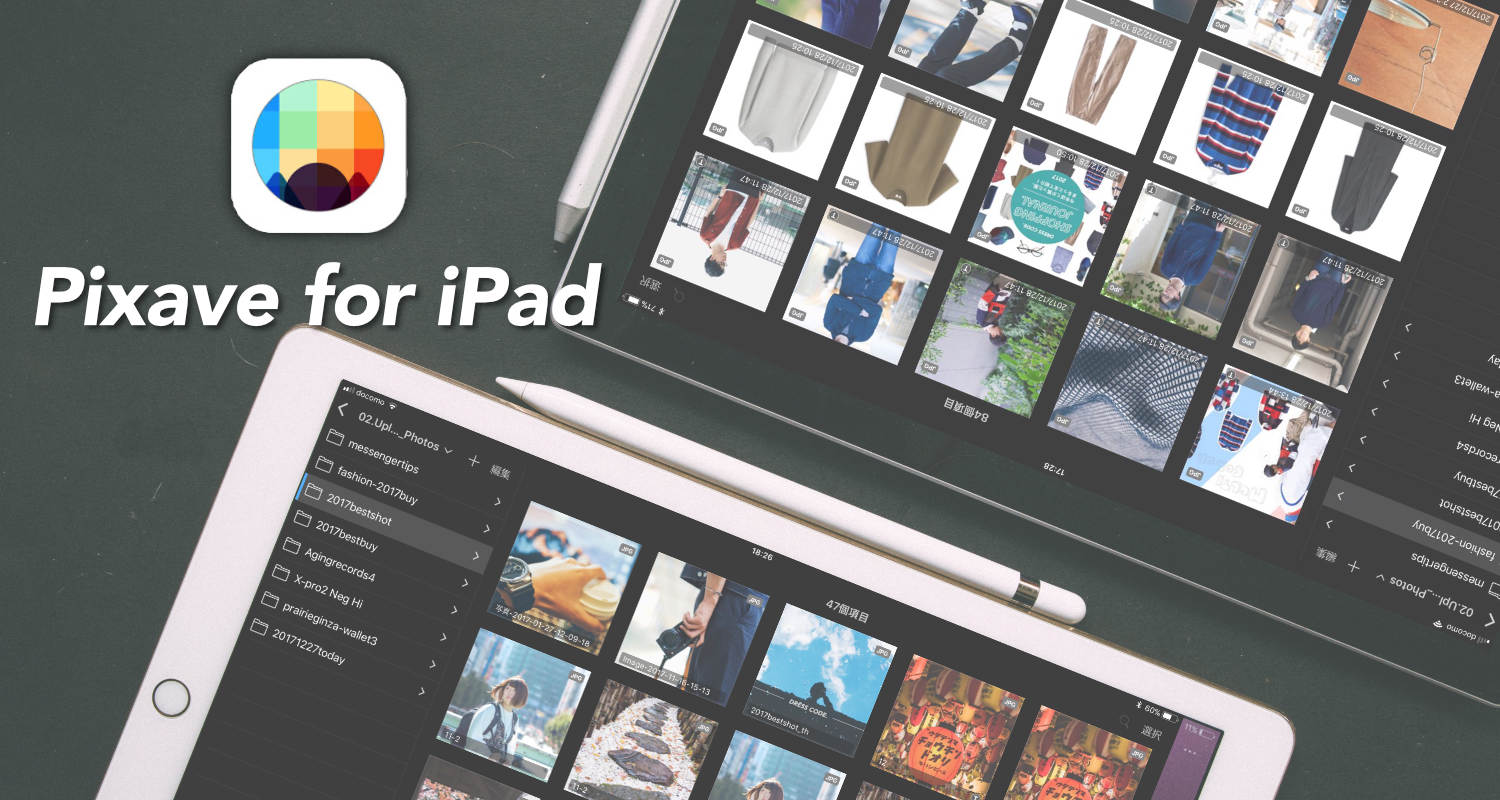
Essentially, Pixave for iPad provides a streamlined environment to manage and view graphic resources. With the user-definable Collections graphic resources can be managed using folders to sort according to the needs of the user and, like the Finder in Macs, provides hierarchical management capabilities. In addition, countless graphic resources can be organized using the highly intelligent Smart Collections, which can be instantly accessed with just a touch without having to search for them, and also graphic resources can be easily searched based on tags.
Nov 20, 2017 Chrome extension allowing native messaging with a native Eid reader plugin. The native Eid reader plugin allows to retrieve data, authenticate or sign with a Belgian eID card using a PC/SC complient Smart card reader. Jun 04, 2019 Pixave makes it easy to add multiple tags to multiple images at once. With its drag and drop tagging, you can simply highlight the relevant tags and place them on the matching pictures. When you’re exporting images, the app saves their tags as keywords in their metadata. Pixave is a robust image organizer, supporting a diverse range of formats with systematic management using Collections, as well as the extremely handy Smart Collections feature. The easy-to-use Drag and Drop has now been tailored to the iOS platform to work wonders.

Easy Import Media by Drag and Drop
By using iOS 11's awesome Drag and Drop feature media can be imported with a minimum of effort. What more is there to say? Plus, Pixave for iPad also offers Share Extension, which allows the user to easily transfer media from various types of programs into Pixave for iPad.
Supports Popular formats!
Pixave for iPad supports common image formats such as GIF, JPEG, JPEG 2000, PNG, TIFF, ICNS, PSD, PDF, BMP, ICO, Camera RAW, EXR, MPO, HEIC, HEIF, MOV, M4V, MP4 as well as document formats from iOS Graphic applications such as Pages, Numbers, Keynote,
Mindnode, Pixelmator, Sketch, Audodesk Graphic, and Procreate.
Machine Learning Tagging
Pixave for iPad offers astonishing tagging abilities. The contents of an image are detected to automatically create or add tags, allowing easy access for the user. To provide the most convenient environment for tagging Pixave for iPad uses 'Machine learning'. Machine learning is a technology that allow computers to learn and then use the learned knowledge to perform specific tasks, to behave more like a person than a computer. Integrated via the new, blazing fast Core ML framework, machine learning lets Pixave for iPad detect and understand various contents within images.
Enhanced Web & Map Capture
One of Pixave for iPad's wonderful features is its Web & Map Capture ability. By using this feature you can save a desired webpage as an image - an absolute must for web designers. And on top of that, the Map Capture ability is nothing lesser - with it a desired location can be easily searched for and instantly saved as an image. And yet another amazing thing is images saved with Map Capture store the location information within it, so that when shared with others the original location information can also be viewed right away. Nice! Wouldn't you say?
Pixave Vs Eagle
All-around viewer
Pixave’s image displaying feature is not limited to only viewing images. Not only can you edit the metadata but you can also use the powerful, Core Image Filters to edit images (JPEG, JPEG 2000, PNG, TIFF only), and animated GIFs. Files such as Pages, Numbers, and Keynote can be easily viewed by using QuickLook. Plus, the built-in PDF, Movie Viewer lets you easily view PDFs and Movies, as well letting you save a part of a movie as Animated GIFs. St microelectronics motherboards driver.
Wis usb devices driver. Multiple Libraries
Pixave supports multiple libraries - you can easily create and manage libraries on your iPad or iCloud, and libraries made using iCloud can be shared with Pixave for Mac for immediate use.
iCloud Sync
Due to its iCloud compatibility, you can sync your Pixave for iPad libraries, with its multiple libraries structure, with iCloud. Users using both Pixave for Mac and Pixave for iPad will find this an extremely useful feature. Pixave for iPad and iCloud enjoy an intimate relationship.
- Compatibility: Requires iOS 11.0 or later. Compatible with iPad.
Want more information ?
ICEDigital ICE stands for Digital Image Correction and Enhancement and is a technology developed by Kodak that removes surface defects, such as dust and scratches from images during the scanning process. The corrections are made on the scanner and is achieved by scanning the image from two different lamps, one a normal RGB lamp and the other infrared . The IR lamp detects the dust or scratch and the image is modified based on the image picked up by the RGB lamp. When ICE was originally created,it was not able to scan Kodachrome slides as the Infrared is absorbed by the cyan layer on the Kodachrome slide, however the technology has evolved and more recent scanners have been able to work with Kodachrome. At Pixave, we have never had a problem scanning Kodachrome slides with ICE but if you would prefer us to disable ICE on your scans, just let us know when you place your order. If a slide is in good condition and has no dust or scratches, it is always preferable to scan without ICE to ensure you are left with an image as close to the original.
Pixave Windows
DPIDots per inch is the term used to measure the density of an image, namely the number of dots that can be placed in a line within 1 inch (2.54cm). The higher the DPI used to scan a slide, the larger the resulting file will be. Most slides are 35mm square, approximately 1.4 inches, so therefore if we scan a slide at 100dpi, we will get an image approximately 140 pixels square. To give you an idea of scale, a modern digital camera taking a 10 megapixel image will create an image approximately 3600 pixels wide, so 35mm slides should be scanned at a MUCH higher resolution. We can scan upto 4800 dpi, which will create an image size of approximately 6700 pixels wide. However, for most everyday usage, such as Facebook, email, standard size prints, 1200dpi should be fine, image sizes will be approximately 2000 pixels wide.
JPG JPEG files are the most commonly used method of storing images on computers and digital cameras. Slides's scanned to JPEG files do produce excellent results whilst taking up a minimum of space, and achieves this by compressing your images, which results in a loss of quality. However, the JPEG standard allows for different levels of compression, with higher quality scans resulting the less you compress the image. By default, Pixave scan your slides in JPEG format with the least level of compression, resulting in high quality images that are reasonably large in size. The quality will be outstanding and will look fantastic for everyday use such as reprinting as a standard size photographs. There are some applications that require a higher quality, e.g. images to be printed in magazines, where professionals require the highest quality possible, in which case, we are happy to scan your photographs in TIFF format which are lossless (i.e. have no compression) but take up HUGE amounts of disk space.
TIFTagged Image File Format (TIFF) files are commonly used to store images within the publishing industry, graphic artists and professional photographers. TIFF files produce a better quality image when compared to JPEG files, because the images are not compressed, however they take significantly more space on your hard drive, e.g. a 1200 DPI scan of a transparency that creates an image sized 5267 * 6899 pixels is 18.2MB in JPEG format but 105.2MB in TIFF format. As you can see from these figures, the JPEG format has removed 80MB of the same image, and therefore it is logical to assume that the TIFF file is of higher quality, however this is a very subjective area as a lot of people cannot tell the difference, and the cost of storing TIFF files compared to JPEG on your systems can be a lot higher simply due amount of disk space required.
Pixave are happy to scan your slides in your choice of resolution file format (JPEG / TIFF) at no extra cost. By default your slides will be scanned at 4800 DPI into JPEG format, if you have different requirements please let us know in the special instructions of our order page or when you speak to us on the phone.