
Citrix Workspace Raspberry Pi 4

- Raspberry Pi 4 Citrix Workspace App
- Installing Citrix Workspace App On Raspberry Pi 4
- Raspberry Pi 4 Citrix Workspace
- Install Citrix Workspace Raspberry Pi 4
- Citrix Workspace Raspberry Pi 4 Setup
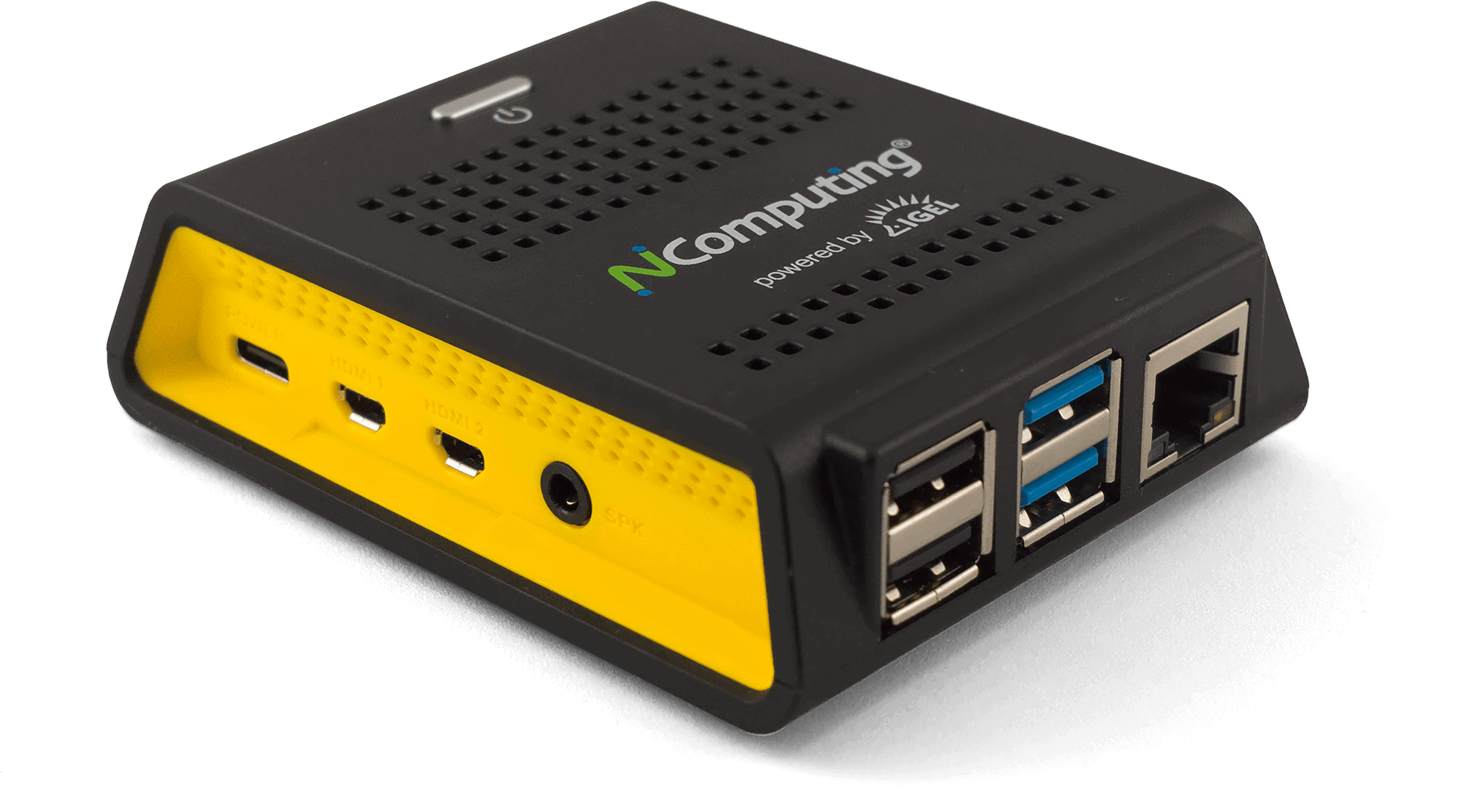
Raspberry Pi 4 thin client optimized for Citrix HDX NComputing has launched a Citrix HDX optimized “RX420 (HDX)” thin client that runs Stratodesk’s Linux-based NoTouch OS on the Raspberry Pi 4. The 2GB RAM equipped device supports dual 4K@30Hz displays without requiring the earlier RPi Zero-based add-on. Supporting the NComputing RX420(IGEL) device and based on the Raspberry Pi 4 platform, IGEL OS(RPI4) expands its range of applications. It is purpose-built for enterprise access to Citrix. On older systems or the Raspberry Pi you may find a browser solely for the purpose of logging in uses too many resources, though. Citrix Workspace App. In most cases a connection of type Citrix Workspace App and a Citrix URL as connection target are enough to successfully run a Citrix client. With the Citrix Ready workspace hub (RX-HDX), NComputing introduces a true next-generation thin client. It is Citrix Ready verified which makes certain that it meets the performance, security and manageability demands of the enterprise.
Citrix Workspace App is the client component of Citrix Workspace. It enables access to a full desktop on a remote host and is available for many different platforms. A colleague recently mentioned it could be installed on a Raspberry. So I have not hesitated and ordered a Raspberry Pi 4 to setup a thin-client for work from home. I use this Raspberry for nothing but Citrix, so I try to keep the number of installed packages at a minimum. Below I will explain how I setup a Citrix Workspace App on Raspbian on a Raspberry Pi 4 with two monitors.
Hardware
- Raspberry Pi 4 Model B 4GB
- 16GB Class 10 SD Card
- 2 x Monitors 1920x1080
Since I wanted to be sure to have enough RAM, I have gone for the 4GB version. It is definitely not needed for this setup. The memory usage usually is below 500MB, so 2G is definitely enough. I use a 16GB SD card since it was as expensive as a 8GB, Rasbian Lite with all the packages takes 2.5GB. 4GB or 8GB would have been enough. Trendnet driver.
Install Rasbian Lite
First the Raspbian Buster Lite image is written to the SD card. It can be downloaded from Rasberry downloads. The SD card may not be /dev/mmcblk0 on a different system. The proper device can be found for example with fdisk -l.
If dd cannot be used to write the image to the SD card, there is a guide in Raspberry documentation.
That’s it, given everything is connected to the Raspberry. It can be booted now. Login is pi and password is raspberry. First, the system is updated and then raspi-config can be run to do some basic configuration.
Raspberry Pi 4 Citrix Workspace App
In order to use the complete screen, overscan is deactivated. Since it is not intended to use this raspberry for anything else than Citrix, it is more convenient to autologin after boot.
- Deactivate overscan: 7 Advanced -> A2
- Autologin into console: 3 Boot -> B2
- Update timezone: 3 Localization -> I2
- Reboot after configuration
Setup window manager and browser
For this thin-client there is no desktop environment with office software, games etc. required. It only needs a browser to get a Citrix session and Citrix Workspace App. If only one monitor is used, almost any window manager can be used. With two monitors it has shown slightly more difficult, Citrix gets _NET_WM_FULLSCREEN_MONITORS message, which is set by the window manager.1 It appears, many window managers do not set this variable. Of the low-footprint window managers I have tried, only xfwm4 and icewm work out of the box with multiple monitors. dwm, jwm and fluxbox have worked with one monitor only. So I have chosen xfwm4, because it looks nicer. To get a Citrix connection, I do need a browser. I chose Midori, because it feels light.
Since I do not want to have any transparency, shadows etc. I deactivated the xfwm4 compositor. The settings menu can be opened through bash.
The window manager should be started when autologin starts bash. So we add the xfce4-panel and xfwm4 to .xinitrc.
And then startx in .bashprofile.
After this we can reboot into xfwm4.
Installing Citrix Workspace App On Raspberry Pi 4
Setup Citrix workspace
So far we have prepared a minimal Raspbian, with a window manager and a browser. Now we can download Citrix Workspace app for Linux (ARM HF) from Citrix for Linux. Make sure to download the ARM version for Debian.
Assuming Workspace app has been downloaded to Downloads, it can the be installed with dpkg. In case there are any packages missing, installation will fail and the missing package will be reported. The missing package can be installed with apt install missing-package and then Workspace app installation with dpkg can be tried again.
Make ssl certificates available to ICAClient.
Raspberry Pi 4 Citrix Workspace
In case the certificate of your companies website is not trusted, you can add it to your certificates and update the certificates.
Install Citrix Workspace Raspberry Pi 4
Citrx Configuration
For my headset to work on the remote host, I also installed Pulseaudio plugin and changed the AllowAudioInput in ~/wfclient.ini to true.
wfclient.ini:

In different applications I use mouse middle click, e.g. to close tabs or to open in a new tab. The default Citrix configuration remaps mouse middle click to paste (ctrl + v). I commented this line with a semicolon.
Backup
Finally, I made a backup of my Raspberry on my notebook.
Start Citrix
Citrix Workspace Raspberry Pi 4 Setup
- Get Citrix connection file
- Open downloaded icx file
References